Our Father,
who art in heaven,
hallowed be thy name.
Thy kingdom come,
thy will be done on earth as it is in heaven.
Give us this day our daily bread,
and forgive us our trespasses
as we forgive those who trespass against us,
and lead us not into temptation,
but deliver us from evil.
This month, let's meditate on this line, "Give us this day our daily bread."
In the middle of these, the words Jesus taught us to pray, we ask God to give us our daily bread.
Consider three points:
1) We ASK
2) We ask FOR BREAD
3) We ask for bread for TODAY
1) God already knows what we need, but He wants us to ASK Him anyway.
The ASKING is where strangers become friends.
The ASKING is where fear becomes love.
The ASKING is where 2 become 1.
The ASKING is where we meet God.
It means a lot to love someone enough to help when they need us.
In this prayer, God asks us to love Him enough to admit that we need Him.
2) BREAD reflects the essence of humanity.
The ingredients fundamentally transform from their initial state, together becoming a new food.
BREAD is energy.
BREAD is life.
BREAD is survival.
It means a lot to ask God for what we would like or would want.
In this prayer, God asks us to trust Him to fulfill our NEED, our absolute NEED to be given the gift of life for one more week, one more day, one more hour, one more moment.
3) DAILY we wake up, and DAILY we go to sleep.
DAILY the sun rises, and DAILY the sun sets.
Yesterday will never return, and tomorrow will always lie ahead;
TODAY is the only day we have. 'This day' means right now.
Every breath of life is a new gift from God. Every moment is 'our daily bread,' and God wants nothing more than for us to know Him so well, love Him so much, and serve Him so freely that our lives respond to his gift every moment with our request for one day's bread and our thanks for being fed.
How is today going?
How has God fed you when you were most in need?
Have you asked God, today, for your daily bread?
How could you thank God today for your daily bread?
Monday, September 30, 2013

Monday, August 19, 2013
I Believe in One, Holy, Catholic, and Apostolic...
Consider how in this Year of Faith we could reflect a hopeful image of a Church that is ONE, HOLY, CATHOLIC, and APOSTOLIC.

Pope Benedict XVI, the pope who declared the Year of Faith, did so in hopes of rekindling the passion and love among the whole Church for the essential truths of our faith. The Second Vatican Council produced many profound documents that address, open up, and apply these truths to the people.
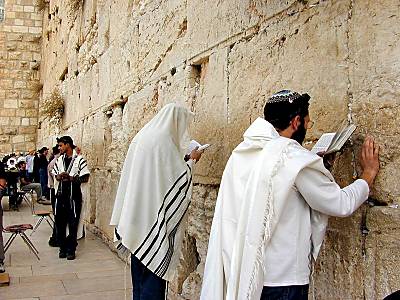
One of these documents is entitled Nostra Aetate in Latin and alternatively recognized in English as The Declaration of the Church on Relations to Non-Christian Religions. Paragraph 2 of Nostra Aetate reads:
Likewise, other religions found everywhere try to counter the restlessness of the human heart, each in its own manner, by proposing "ways," comprising teachings, rules of life, and sacred rites. The Catholic Church rejects nothing that is true and holy in these religions. She regards with sincere reverence those ways of conduct and of life, those precepts and teachings which, though differing in many aspects from the ones she holds and sets forth, nonetheless often reflect a ray of that Truth which enlightens all men.
Thus, even within other religions, some "ray of Truth" can be found.
Since, the law of the Lord is written on the hearts of his people, we all yearn for our God. Dt.30:11-20
As we near the end of the Year of Faith, let's work in patience and fortitude to become one, more and more, with every human being who shares our journey and search for God, whether Christian or non-Christian, whether practicing or non-practicing.
Let us pray for the grace to encourage and to be encouraged to find God where we are, in our hearts and in our lives.
Let us especially pray for the grace to encourage and to be encouraged to find God in the Church, through prayer and Sacrament.
Let us BE Sacrament that we all may seek God where he may be found and reach out to God where God already eagerly waits to embrace us.
Pope Benedict XVI, the pope who declared the Year of Faith, did so in hopes of rekindling the passion and love among the whole Church for the essential truths of our faith. The Second Vatican Council produced many profound documents that address, open up, and apply these truths to the people.
One of these documents is entitled Nostra Aetate in Latin and alternatively recognized in English as The Declaration of the Church on Relations to Non-Christian Religions. Paragraph 2 of Nostra Aetate reads:
Likewise, other religions found everywhere try to counter the restlessness of the human heart, each in its own manner, by proposing "ways," comprising teachings, rules of life, and sacred rites. The Catholic Church rejects nothing that is true and holy in these religions. She regards with sincere reverence those ways of conduct and of life, those precepts and teachings which, though differing in many aspects from the ones she holds and sets forth, nonetheless often reflect a ray of that Truth which enlightens all men.
Thus, even within other religions, some "ray of Truth" can be found.
Since, the law of the Lord is written on the hearts of his people, we all yearn for our God. Dt.30:11-20
As we near the end of the Year of Faith, let's work in patience and fortitude to become one, more and more, with every human being who shares our journey and search for God, whether Christian or non-Christian, whether practicing or non-practicing.
Let us pray for the grace to encourage and to be encouraged to find God where we are, in our hearts and in our lives.
Let us especially pray for the grace to encourage and to be encouraged to find God in the Church, through prayer and Sacrament.
Let us BE Sacrament that we all may seek God where he may be found and reach out to God where God already eagerly waits to embrace us.
Tuesday, April 9, 2013
FAITH HOPE AND LOVE: the Word of God (Dei Verbum)
The Year of Faith initiated, among other renewals, a renewed reading and
appreciation of the documents produced from the Second Vatican council.


This
month, we look to Dei Verbum (On DivineRevelation).
Why
was Dei Verbum written? What more do
we need to know about Sacred Scripture, our Bible?
But perhaps we have forgotten the Word
who shares in our flesh, the Word within the words of Scripture written on our hearts and revealed to us intimately. Jeremiah 31:33
The document Dei Verbum was written “so that by hearing the message of salvation
the whole world may believe, by believing it may hope, and by hoping it may
love.”Dei Verbum, Preface
Perhaps
the journey toward love can start anywhere, but our God gave us doorway into
his love revealed in the Word, which we call Scripture. In this month of April,
let’s remember the gift God has given us in the Holy Scripture, the Divine Revelation, and begin (or begin again) our journey toward love.
In
believing we may hope, and in hoping we may love, and in loving we may share
the joy of God who is love. 1 John 4:8
Peace be with You...
Peace be with You...
Monday, March 18, 2013
The Sacraments Make the Church
During the "Year of Faith," Pope Benedict XVI invited the whole Church to reflect on the documents of Vatican II so that we may deepen our faith.
With this in mind, we turn to a short passage from one of the excellent documents from the Second Vatican Council.
"It is of the essence of the Church that she be both human and divine, visible and yet invisibly equipped, eager to act and yet intent on contemplation, present in this world and yet not at home in it... While the liturgy daily builds up those who are within... at the same time it marvelously strengthens their power to preach Christ, and thus shows forth the Church to those who are outside as a sign lifted up among the nations under which the scattered children of God may be gathered together, until there is one sheepfold and one shepherd." Sacrosanctum Concilium
The Church is human, so the sacraments are made by the Church, real men and women with tangible matter and human words.
Yet the Church is divine, so the sacraments make the Church by the Mystery of God's power and love extended to us through his Son, Jesus, in communion with the Holy Spirit.
God became human to show us his love in ways we can understand.

God became sacrament for us.
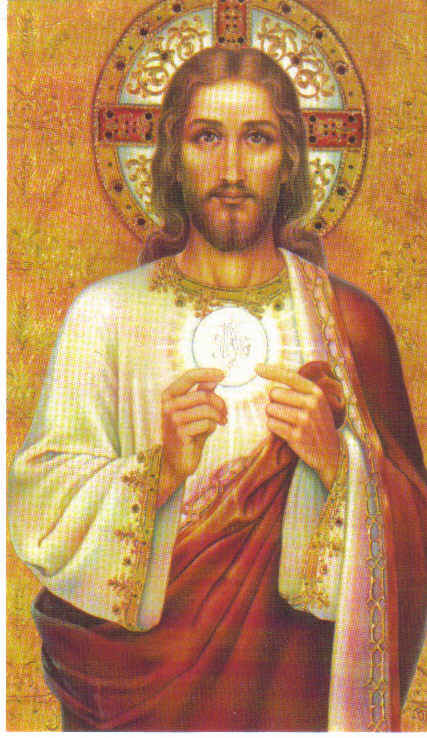
Just so, he asks us to perpetually become more and more sacrament for his Church and for his world.

And, through sacrament and liturgy, he has never stopped showing his love to us since.

This month, let us appreciate Pope Benedict XVI, who humbled himself, giving the whole Church a model of sacrament and giving the whole world occasion to reconsider God, the source of sacrament and the author of love.

With this in mind, we turn to a short passage from one of the excellent documents from the Second Vatican Council.
"It is of the essence of the Church that she be both human and divine, visible and yet invisibly equipped, eager to act and yet intent on contemplation, present in this world and yet not at home in it... While the liturgy daily builds up those who are within... at the same time it marvelously strengthens their power to preach Christ, and thus shows forth the Church to those who are outside as a sign lifted up among the nations under which the scattered children of God may be gathered together, until there is one sheepfold and one shepherd." Sacrosanctum Concilium
The Church is human, so the sacraments are made by the Church, real men and women with tangible matter and human words.
Yet the Church is divine, so the sacraments make the Church by the Mystery of God's power and love extended to us through his Son, Jesus, in communion with the Holy Spirit.
God became human to show us his love in ways we can understand.
God became sacrament for us.
Just so, he asks us to perpetually become more and more sacrament for his Church and for his world.
And, through sacrament and liturgy, he has never stopped showing his love to us since.
This month, let us appreciate Pope Benedict XVI, who humbled himself, giving the whole Church a model of sacrament and giving the whole world occasion to reconsider God, the source of sacrament and the author of love.
Thursday, February 14, 2013
Liturgy: We Celebrate
The
liturgy is the summit toward which the activity of the Church is
directed; it is also the font from which all her power flows. CCC #1074 cf. John Paul II CT 23
The work of the people, the liturgy, this is faith celebrated. There are 188 hours in one week, and a typical Mass lasts only 1 hour. Yet, within this sacred time we are scandalously afforded the opportunity to experience God's love here and now, touch it, taste it, hear it, smell it, worship it, love it. As I am writing this at my desk on the day after Ash Wednesday, we have just begun the season of Lent. Don’t forget, don’t ever forget, God is STILL
with us, now more than ever. Please remember that it is Emmanuel, the Anointed,
the Lamb of God who has this running date with us each and all, this open
invitation into his embrace. Even in the darkest times, God is love. 1 John 4:8,16 God is with us in the liturgy: the summit and
the font. Yes, ‘I believe,’ and also ‘we believe.’ But so crucially and
extraordinarily we ‘celebrate.’
Don’t forget, don’t ever forget, God is STILL
with us, now more than ever. Please remember that it is Emmanuel, the Anointed,
the Lamb of God who has this running date with us each and all, this open
invitation into his embrace. Even in the darkest times, God is love. 1 John 4:8,16 God is with us in the liturgy: the summit and
the font. Yes, ‘I believe,’ and also ‘we believe.’ But so crucially and
extraordinarily we ‘celebrate.’

The work of the people, the liturgy, this is faith celebrated. There are 188 hours in one week, and a typical Mass lasts only 1 hour. Yet, within this sacred time we are scandalously afforded the opportunity to experience God's love here and now, touch it, taste it, hear it, smell it, worship it, love it. As I am writing this at my desk on the day after Ash Wednesday, we have just begun the season of Lent.
Don’t forget, don’t ever forget, God is STILL
with us, now more than ever. Please remember that it is Emmanuel, the Anointed,
the Lamb of God who has this running date with us each and all, this open
invitation into his embrace. Even in the darkest times, God is love. 1 John 4:8,16 God is with us in the liturgy: the summit and
the font. Yes, ‘I believe,’ and also ‘we believe.’ But so crucially and
extraordinarily we ‘celebrate.’
Monday, January 7, 2013
So Much Stuff to Believe In
I believe in the Holy Spirit,
the holy catholic Church,
the communion of saints,
the forgiveness of sins,
the resurrection of the body,
and the life everlasting. Amen.


the holy catholic Church,
the communion of saints,
the forgiveness of sins,
the resurrection of the body,
and the life everlasting. Amen.
What does this mean
and why does it matter?
When God became man he did not cease to be God. Instead, God
transformed humanity so that, NOW, we can experience God in ways we CAN
understand.
Jesus brought God and God is still here.
Jesus assembled the twelve and sent them out to be Church. Matt 28:20
Jesus taught us to pray and he gives us saints to help us
pray. Matt 6:9
Matt 16:18-19 John 20:23
Jesus resurrected so that we may be resurrected. John 11:25
Jesus came so that we could have the everlasting life, the life that
makes life worthy living.
Jesus lived so that we can live.
Because Jesus lives, we can
live... really live.
Our living comes from his living.
For every thing that Christ called us to become, Christ gave
us a way to become it:
Church,
saints,
forgiveness,
resurrection,
life.
How’s your life?
Becoming is an adventure. Tell us about your
adventure.
Subscribe to:
Posts (Atom)